





at-home vs professional red light treatments: which is better for consistent skin results?
Wondering whether to invest in an at-home red light therapy device or book professional treatments? Here's how they compare in terms of results, consistency, cost and convenience.

introduction
Red light therapy is now available in two very different settings: professional clinics and at home. Both can have a place in a skincare routine. The real question is not which one sounds more advanced, but which one you can use consistently enough to see results.
The key message is simple: red light therapy is a frequency-led treatment. For visible red light therapy benefits, repeated exposure matters. A professional clinic visit once a week, once a month or before a special event may be useful, but an at-home red light therapy device used three to five times a week is often better aligned with how photobiomodulation is studied and how skin changes occur over time.
how professional red light treatments work
Professional red light therapy or LED treatments are usually performed in a clinic, facial studio or dermatology-led environment. A practitioner may cleanse the skin, select wavelengths, position the device and provide eye protection. Some clinics use LED as a standalone treatment, while others use it after peels, microneedling, lasers or facials to support comfort and recovery.
The advantages are clear. Professional systems may offer stronger output, larger treatment coverage and expert supervision. They may be particularly useful if you are combining LED with other treatments, managing a specific skin concern, or want practitioner guidance.
The limitation is access. You need an appointment, travel time and budget. If your goal is long-term skin support, the biggest barrier may not be whether clinic LED works. It may be whether you can realistically attend often enough.
how at-home red light therapy works
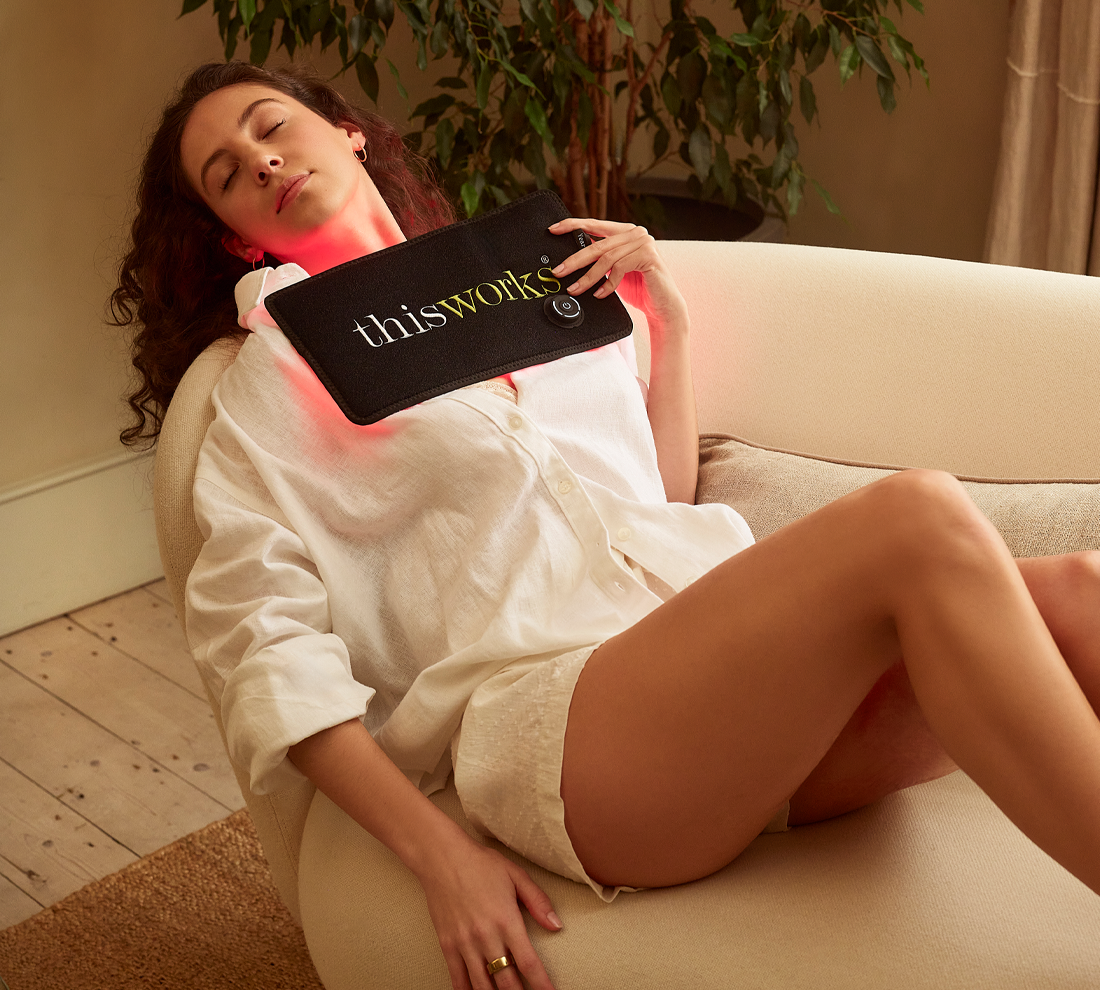
At-home red light therapy devices are designed for regular personal use. They are usually lower intensity than professional systems, but they compensate through convenience and frequency. A well-designed red light therapy device can be used on clean skin for short sessions several times a week.
This matters because photobiomodulation is not a one-off event. It depends on repeated signalling. If the skin receives appropriate light exposure three to five times a week, that repeated stimulus may better support gradual changes in texture, comfort and visible skin quality.
At-home treatment also supports habit formation. The device can become part of an evening routine, much like applying a serum or moisturiser. For many people, the treatment they actually complete is more valuable than the treatment they intend to book.
why three to five sessions a week matter
Most people want to know: how often should I use red light therapy on my face?
The most practical answer is usually three to five times per week, depending on your red light therapy device, skin tolerance and treatment goals.
This frequency makes sense biologically. Red light therapy influences cell signalling, mitochondrial function and repair pathways. These processes are gradual. Regular sessions create repeated opportunities for the skin to respond. Monthly clinic visits may feel luxurious, but they may not provide the consistent stimulus needed for visible ongoing change.
A useful comparison is exercise. A single monthly workout is better than nothing, but it will not produce the same adaptation as short, regular sessions several times per week. Red light therapy is similar. Consistency shapes the outcome.
comparing the cost
Professional LED light therapy facials vary in price depending on the clinic, treatment and location. In the UK, a single session often starts at around £45 to £65, with some clinics charging considerably more depending on the treatment package.
This means a weekly clinic programme can become expensive. Even at £50 per session, weekly treatment costs around £200 per month. At £75 per session, monthly costs increase to around £300. While courses of treatments may reduce the price per visit, ongoing maintenance still requires additional appointments.
An at-home red light therapy device has a higher upfront investment, but the cost per use decreases over time. Used consistently three to five times a week, it may become more economical than repeated clinic visits.
The value is not only financial. It also saves travel time, booking appointments and the inconvenience of fitting treatments around your schedule.
results: professional intensity or home consistency?
Professional treatments may offer higher power and expert customisation. At-home devices offer repeatability.
Choose professional treatments if you:
- Want practitioner assessment.
- Are combining LED with other aesthetic procedures.
- Have complex skin concerns.
- Prefer supervised treatment.
Choose at-home red light therapy if your goal is:
- Consistent skin maintenance.
- Gradual improvement in skin texture and fine lines.
- Convenience.
- Better long-term adherence to your routine.
For many people, the strongest approach combines both. Professional treatments can provide targeted support, while an at-home device helps maintain results between appointments.
If choosing one route for ongoing skin quality, consistency should be the deciding factor. A device used several times each week is more closely aligned with how photobiomodulation works than an occasional clinic session.
is at-home red light therapy as powerful?
Usually, no.
At-home devices are generally designed with consumer safety and ease of use in mind. That often means lower output than professional systems. However, power is only one factor.
Treatment time, wavelength, distance, coverage and frequency all influence results.
A lower-powered red light therapy device used correctly and regularly may be more effective than a stronger treatment used only occasionally. The goal is not to deliver the most intense session possible. It is to deliver the right dose consistently.
safety and best practice
Whether you're using at-home red light therapy or visiting a clinic, treatments should always be used responsibly.
Start with clean, dry skin. Follow the manufacturer's instructions. Use eye protection where recommended and avoid exceeding the suggested treatment time.
People with photosensitive conditions, those taking photosensitising medication, those with eye disease, a history of skin cancer or suspicious lesions, or anyone under medical care should seek professional advice before using light therapy for skin.
the bottom line
Professional red light treatments can be valuable, particularly when supervised or combined with other skin procedures.
For everyday skin support, however, at-home red light therapy offers one major advantage: consistency.
The science behind red light therapy benefits is based on repeated cellular signalling rather than occasional intensity. For many people, using a red light therapy device three to five times a week is more realistic, more cost-effective and better suited to gradual improvements in skin quality than occasional clinic visits.
Ultimately, the best red light therapy for your face is the routine you can stick to consistently.
red light related posts
 expertsgetting on your nerves? episode 5: the September switchIn episode 5 of getting on your nerves?, Dr Anna Persaud is joined by medical doctor Dr Lana Gault to explore the September switch – how the transition from summer into autumn affects our physical health, mental wellbeing, sleep and...read post
 expertsgetting on your nerves? bonus episode: getting out of your head, into your bodyIn this Wellness Weekender special of getting on your nerves?, Dr Anna Persaud is joined by wellness expert and integrative therapist Esther Triviño to explore somatic yoga, interoception, nervous system regulation and how movement, breath, sound and sensory cues can...read post
 expertsgetting on your nerves? episode 4: wherever I lay my hatWhy can some people sleep anywhere, while others struggle as soon as their surroundings change? Dr Anna Persaud and Professor Gaby Badre explore sleep adaptability, circadian rhythm, nervous system regulation and how to become a more resilient sleeper when conditions...read post
 expertsgetting on your nerves? episode 3: the power of nowIn episode 3 of getting on your nerves?, Dr Anna Persaud is joined by psychotherapist and trauma expert Lauren Baird to explore why being present can feel so difficult. From negativity bias, fight or flight and the window of tolerance...read post
 expertsgetting on your nerves? episode 2: the upper body editIn episode 2 of getting on your nerves?, Dr Anna Persaud is joined by Dr Lana Gault and This Works ambassador Mithra Nandu to explore how stress and nervous system dysregulation show up in the upper body. From jaw tension,...read post
 expertsgetting on your nerves? episode 1: signs you are stressedIn episode 1 of getting on your nerves?, Dr Anna Persaud is joined by medical doctor Dr Lana Gault to explore how stress first shows up in the body and mind. From burnout, fatigue and disrupted sleep to fight or...read post
 sleep hygienecan you train your brain for bedtime?Can a familiar scent become a signal that it is time to sleep? Professor Gaby Badre explores the connection between scent, the brain and nervous system — and how repeated sensory cues may help support the transition from daytime alertness...read post
 sleep hygienewhen the brain won’t switch off: understanding chronic insomniaWhy can sleep remain difficult long after the original trigger has passed? Professor Gaby Badre explores the science of chronic insomnia, the hyperarousal that can keep the brain alert at night, and how the brain can be retrained for sleep.read post
